Job market
Layoffs touched a real minority of designers this year, yet job security concern runs far more widely than the layoff numbers alone would suggest.
Chart proof
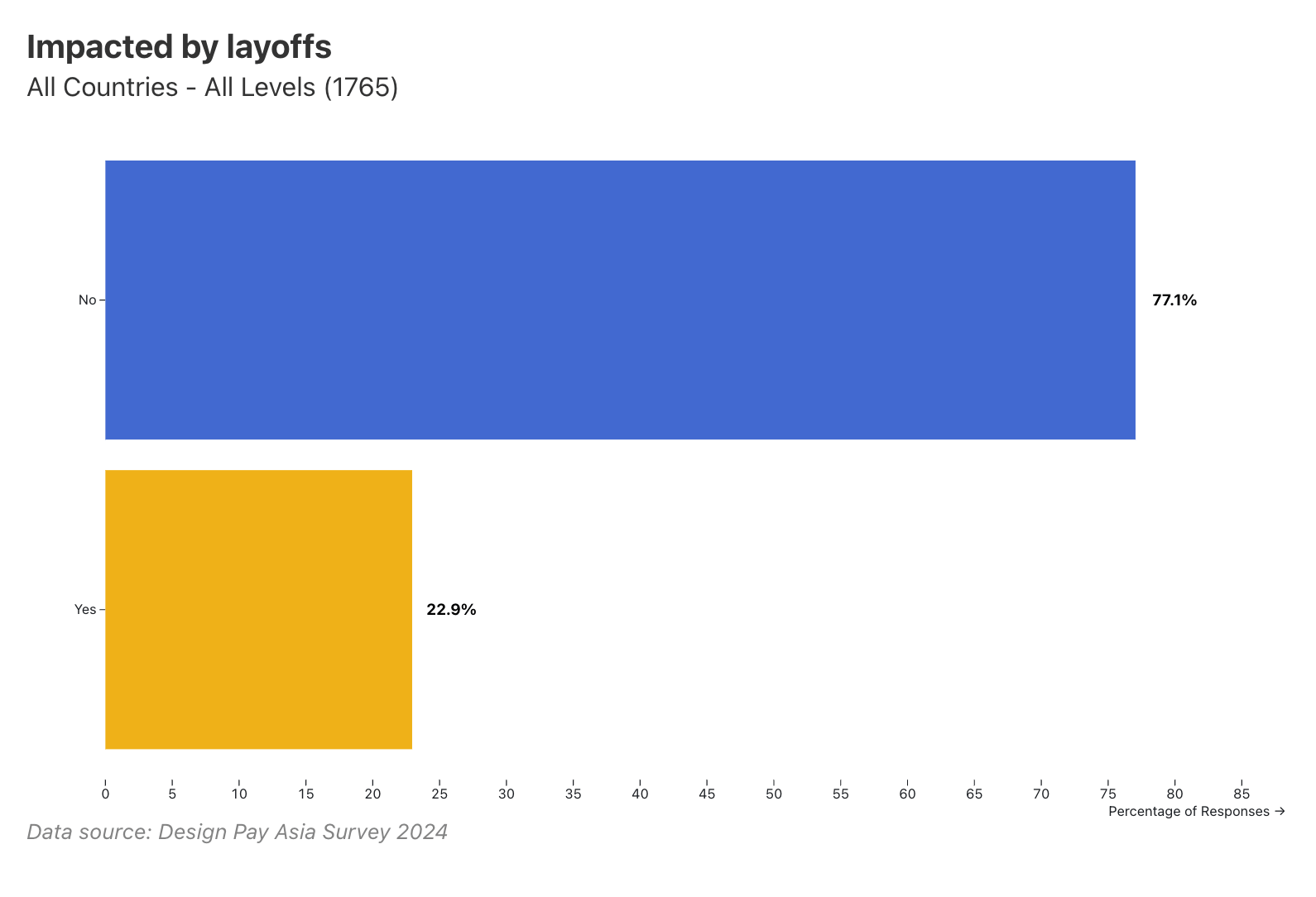
Impacted by layoffs
Share of designers affected by layoffs in the past year.
22.9% of designers were affected by layoffs, while 77.1% remained unimpacted.
View data table
| Outcome | Respondents (n) | Proportion |
|---|---|---|
| Impacted by layoffs | 405 | 22.9% |
| Unimpacted | 1,360 | 77.1% |
Job insecurity has outrun the actual job losses.
Chart proof
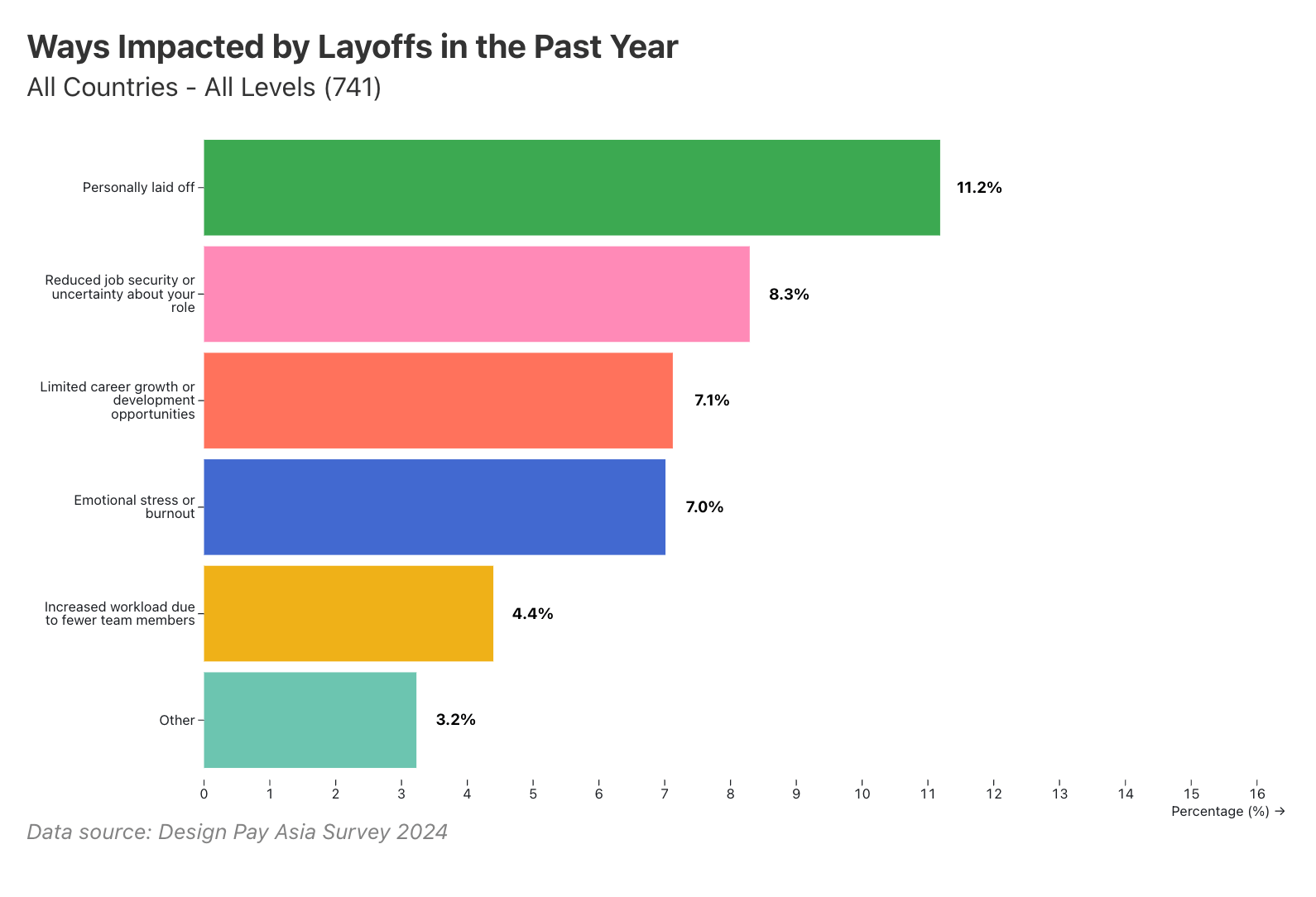
Ways of being impacted by layoffs in the past year
Breakdown of how layoffs affected designers among those who reported an impact.
Personal job loss (11.1%) and reduced job security (8.2%) were the most common effects among the 22.9% affected.
View data table
| Impact type | Respondents (n) | Proportion |
|---|---|---|
| Personal job loss | 201 | 11.1% |
| Reduced job security | 149 | 8.2% |
| Limited growth | 128 | 7.1% |
| Emotional stress | 126 | 6.9% |
| Increased workload | 79 | 4.4% |
Chart proof
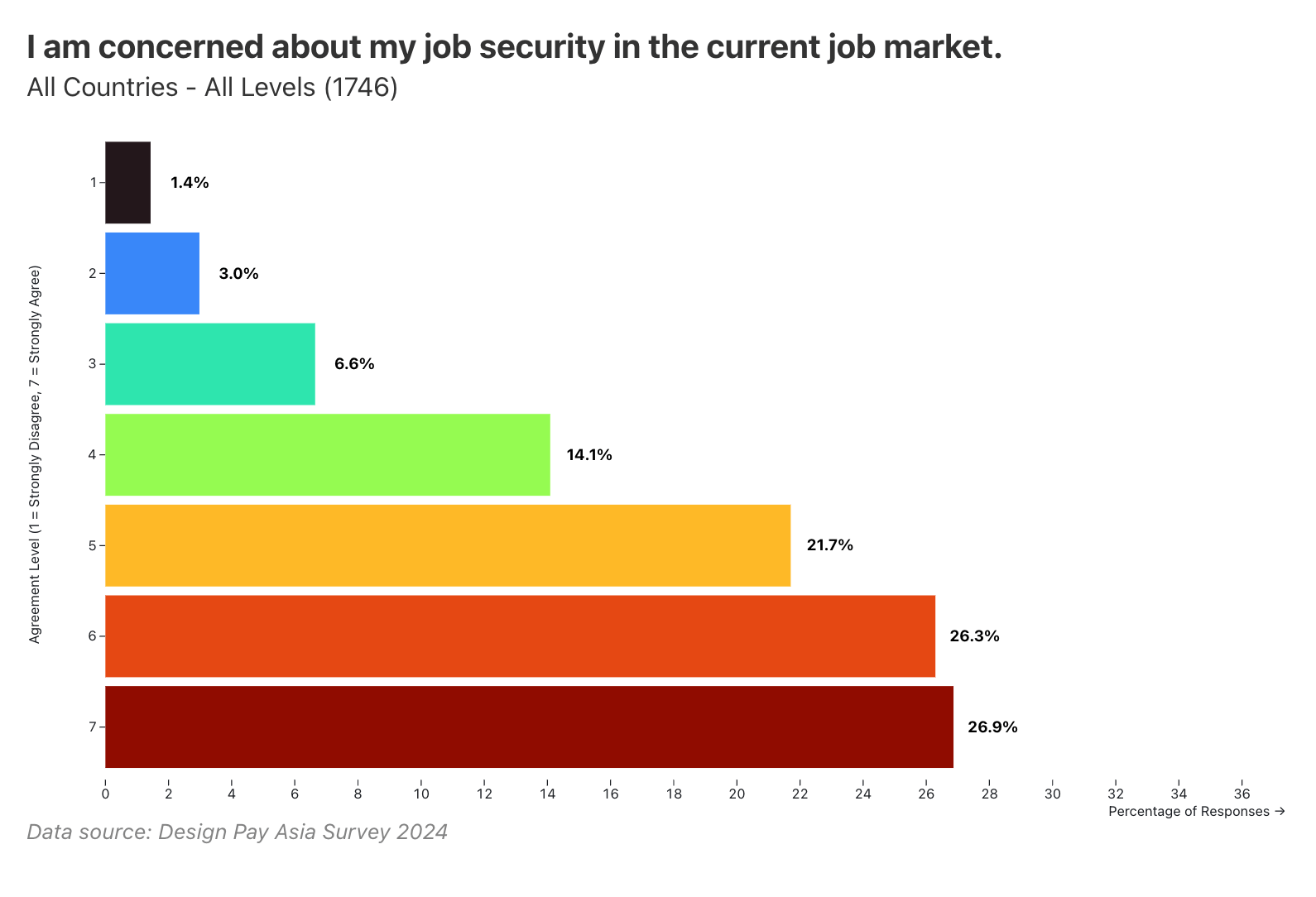
I am concerned about my job security in the current job market
Job security concern rating distribution across all designers surveyed.
74.8% of designers rate their job security concern at 5 or higher, despite the majority being personally unaffected by layoffs.
View data table
| Concern level | Respondents (n) | Proportion |
|---|---|---|
| Concerned (rating 5 or higher) | 1,307 | 74.8% |
| Not concerned (rating below 5) | 439 | 25.2% |
Chart proof
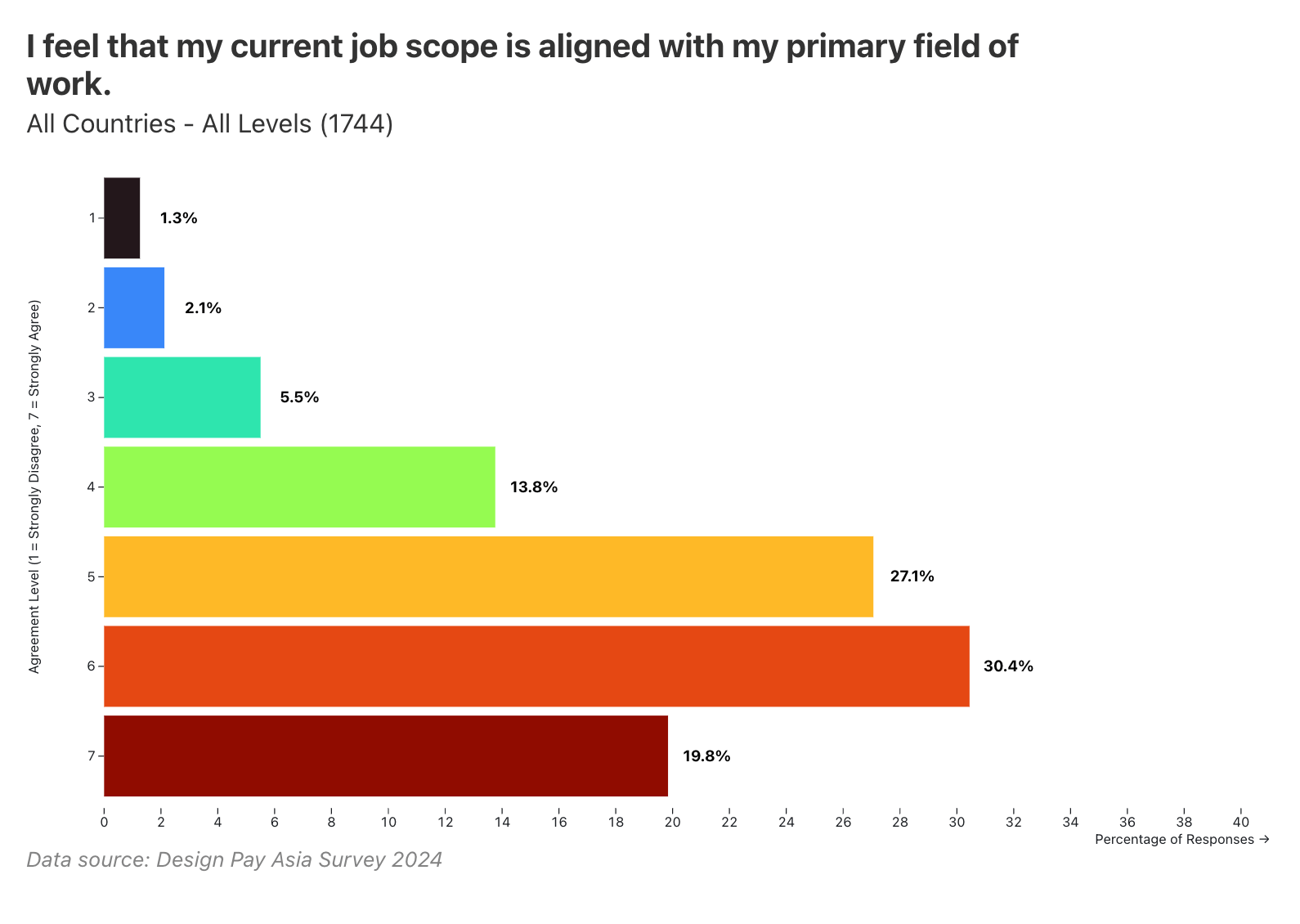
I feel that my current job scope is aligned with my primary field of work
Self-reported alignment between current role and designer's primary field.
77.3% of designers report strong alignment between their job scope and their primary field of expertise.
View data table
| Response | Respondents (n) | Proportion |
|---|---|---|
| Strong alignment (ratings 5–7) | 1,349 | 77.3% |
| Low alignment (below 5) | 395 | 22.7% |
Chart proof
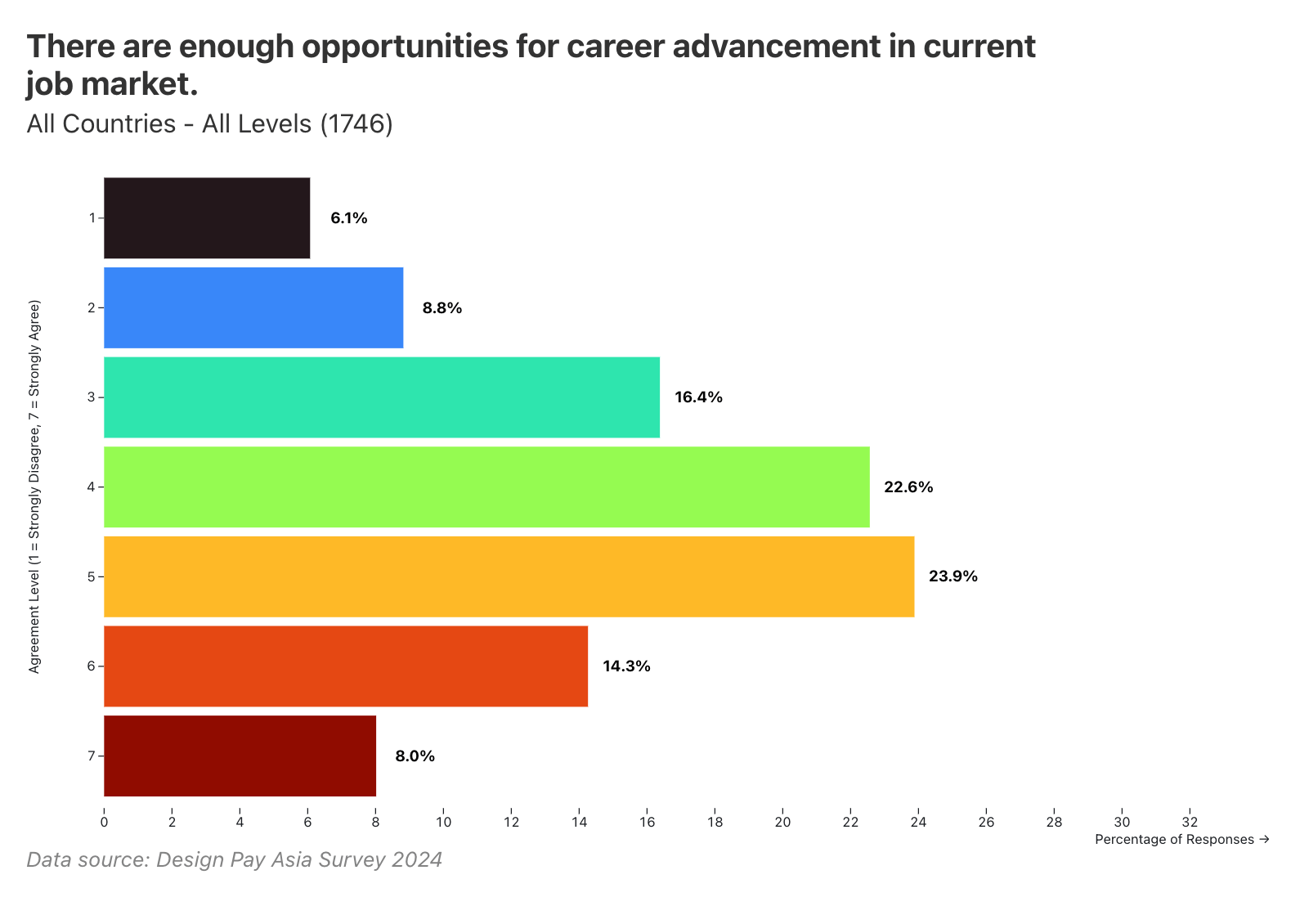
There are enough opportunities for career advancement in the current job market
Designer perceptions of available career advancement opportunities.
46.3% of designers see sufficient advancement opportunities in the current market, despite high role alignment.
View data table
| Response | Respondents (n) | Proportion |
|---|---|---|
| Sufficient opportunities (ratings 5–7) | 806 | 46.3% |
| Insufficient opportunities | 940 | 53.7% |
Put the last three findings together and a pattern appears: designers feel aligned in the work they're doing, but most don't see enough room to grow from where they sit. Fit isn't the shortfall. Room is.
Whether that gap closes as the market steadies, or hardens into how designers plan their careers from here, is still open.
What this means for you
If you're a designer
- Look at different ways to keep learning (like podcasts, online content, community events).
- Watch for new opportunities in emerging areas like AI, less established industries, or as the market improves.
If you're leading a team or organisation
- Think about how to acclimatise to new technology like AI while keeping your team feeling secure and motivated.
- Help prevent burnout when extra effort does not lead to better rewards.
- Balance being careful with hiring while staying ready for market recovery.
- Consider if you are investing in design because it is valuable or just following trends.
Evidence and further reading
Evidence used in this section
-
Regional job security concern and layoff exposure in 2024
74.8% of designers express concern about job security, and 22.9% report being directly affected by layoffs, across the 2024 regional Design Pay Asia survey sample.
Further reading and context
Questions worth exploring
How will AI continue to change what designers do day-to-day?
Worth exploring next
- Will the design market in Southeast Asia recover on the same timeline as the wider regional tech sector?
- How can the industry better balance new graduates and existing talents with market demand?
- What new design specialties might emerge as technology and business needs evolve?
- How might cross-border work opportunities change in Southeast Asia?
Where this sits in the conversation
-
Overview
2024 report -
Landscape
Demographics -
Landscape
Roles & experiences -
Landscape
Compensation -
Landscape
Company landscape -
Sentiments
Offer & negotiation -
Sentiments
Career progression -
Sentiments
Value of design -
Sentiments
Job market you are here -
Singapore deep dive
Singapore deep dive -
Close
The conversation continues
Commentary
Looking at the job market for designers across Southeast Asia, there is a notable gap between perception and reality.